
 Hugo Mercer
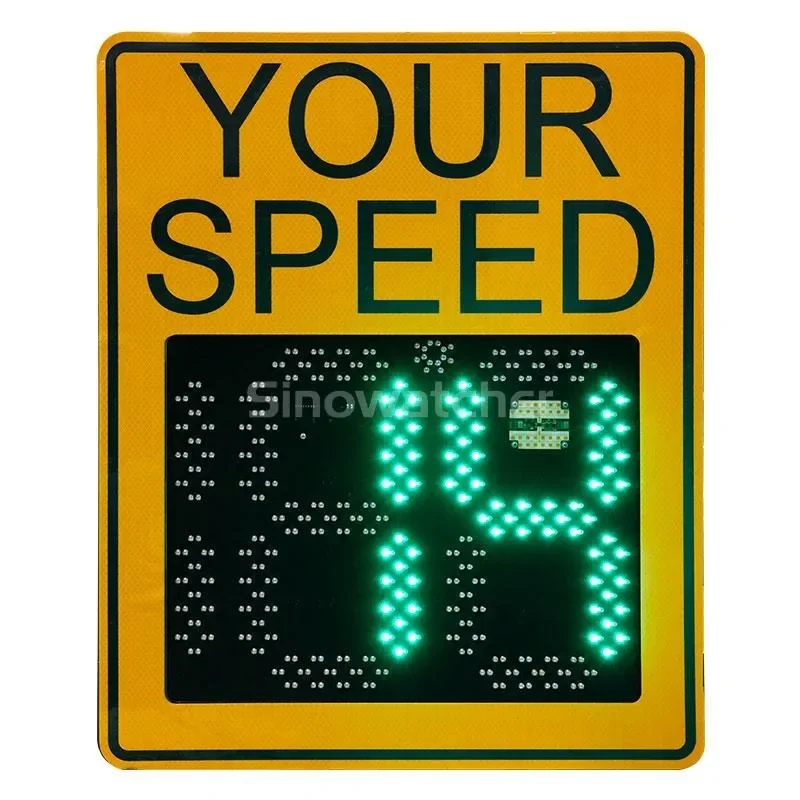 School zones are a concentrated challenge because the risk isn’t spread evenly across the day. It’s squeezed into two frantic windows: morning drop-off and afternoon pick-up. For roughly forty minutes in each, the street outside a school becomes the most chaotic stretch of road in the neighbourhood, with double-parked cars, buses swinging wide, children darting between bumpers and distracted drivers in a hurry. That’s when a speed feedback sign earns its keep, because every driver in that crush has divided attention.
Why school zones are high risk
Children are harder for motorists to spot, worse at judging an approaching vehicle’s speed and far more fragile in a collision. A pedestrian struck at 30 mph faces a significantly higher risk of death than one struck at 20 mph. Static school-zone signs have been the default tool for decades, yet compliance drops just when it matters most. Drivers who would never speed past a school at noon often roll through at 35 mph in the morning rush, not out of malice but because a static sign gives no real-time feedback. A dynamic speed feedback sign fills that gap by showing an objective number no driver can easily argue with.
Where to place the sign
Placement separates a sign that protects children from street furniture. The display must be visible at the point where a driver decides their speed, typically 150 to 250 metres before the school entrance or main pedestrian crossing. Closer, and the driver is already committed to their speed. Farther, and the message fades before the vehicle reaches the risk zone. Where a street has several approaches, install one sign per direction, since a display facing the wrong way protects nobody.
Mounting height and viewing angle matter too.
- The unit should sit at standard driver eye level, but planners should also walk the crossing themselves and check sight lines from the kerb, because parked SUVs at drop-off can hide a low-mounted sign.
- Aim the radar squarely down the centre of the approach lane for accurate readings.
- Revisit the site after the first week, since real traffic often differs from the plan and small adjustments can help.
Pair it with flashing beacons
A speed feedback sign works best as part of a wider safety system. Time-controlled flashing beacons, the familiar amber lights, tell drivers when the reduced limit is enforced, while the feedback display shows whether they’re actually complying. Using either alone leaves a gap. Beacons without feedback depend on drivers checking their own speedometers, and a feedback sign without beacons can leave motorists unsure which limit applies.
The combination also helps with practical and political hurdles. Beacons are widely accepted but can fade into background noise once drivers get used to them. Adding a feedback sign renews awareness without costly traffic calming like speed bumps. Several municipal districts report that the pairing cuts school-zone speeding more than either device alone. It answers the two questions every driver asks near a school: does the reduced limit apply right now, and am I exceeding it?
Schedule the sign by time of day
A sign doesn’t need to run at full intensity around the clock. Modern units with scheduling software can switch profiles by time of day, running in school-zone mode at drop-off and pick-up and moving to a standard or dimmed state the rest of the day. This extends the life of solar-powered units by resting the LEDs when risk is low, and it preserves the sign’s impact. A display that flashes at every passing vehicle all day becomes wallpaper, while one that wakes up for school hours keeps its urgency.
Scheduling also defuses the most common resident complaint, light from a bright display shining into bedroom windows late at night. Programming the unit to dim or sleep overnight makes complaints fade. If residents ask why it goes dark at midnight, the answer is simple: the system works hardest when children are present.
Build community support
The last ingredient is community engagement rather than hardware. A sign outside a school succeeds or fails on local buy-in, and parents matter most. Agencies should announce installations through school newsletters, explain what the display does and publish the results. Sharing numbers, such as average speeds dropping in the first month, turns a metal box into a shared community win.
Involving the school brings more benefit. Some districts let student councils adopt the sign and use monthly speed readings for math projects, while others build the logged data into road-safety lessons. A sign children understand reinforces itself: kids remind their parents to slow down, and parents who ease off set an example for other families. The hardware starts the change and the community completes it. When budgets come under scrutiny, concrete data, supportive parents and a good local story are a strong basis for extending the program to other schools.
Leave a Reply
Your email address will not be published. Required fields are marked *