
 admin
Gerry Eggert is a student at the University of the Fraser Valley (UFV) in British Columbia, taking classes in philosophy, psychology, and creative writing. He is, in most respects, a typical undergraduate—except for one distinct detail: Eggert is 84 years old.
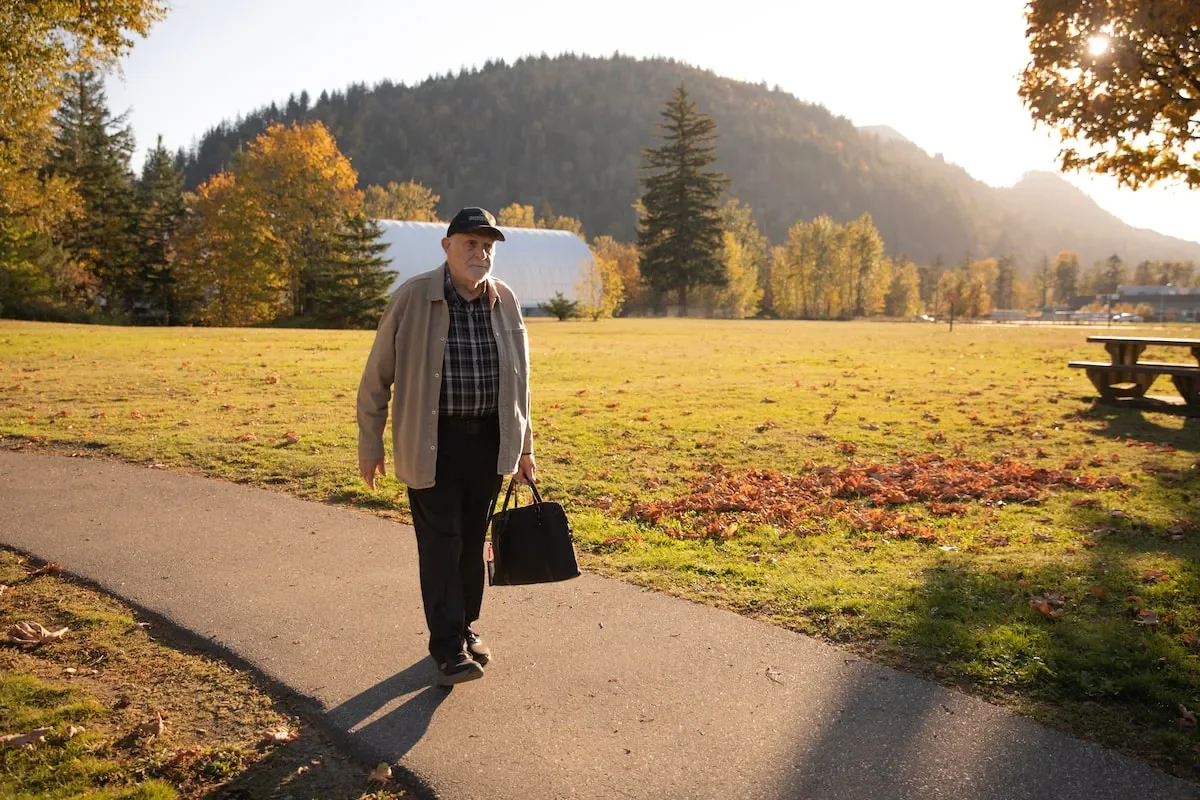
After seven years in the navy and a long business career, Eggert says he attempted retirement two or three times, but it never lasted. When his youngest granddaughter approached high school graduation, he conceived an idea: he would enroll with her at the university—having never finished his own studies as a younger man—so they could eventually graduate together.
Though his granddaughter chose to go straight into the workforce instead, Eggert decided to register anyway. He started his studies at UFV in 2022—the same year the institution joined the Age-Friendly University (AFU) Global Network.
Founded in Dublin in 2012, the AFU’s objective is to make higher education more inclusive of older adults through diverse learning opportunities, curriculum development, intergenerational exchange, and health and wellness activities. It utilizes 10 core principles to make campus life accessible to older generations, aligning with the World Health Organization’s (WHO) Age-Friendly Cities and Communities framework.
What are the 10 Principles of an Age-Friendly University?
The Global Network is built around ten foundational principles designed to encourage intergenerational harmony, research, and lifelong engagement:
-
To encourage the participation of older adults in all the core activities of the university, including educational and research programs.
-
To promote personal and career development in the second half of life and to support those who wish to pursue second careers.
-
To recognize the range of educational needs of older adults (from early school-leavers to those wishing to pursue graduate degrees).
-
To promote intergenerational learning to facilitate the reciprocal sharing of expertise between learners of all ages.
-
To widen access to online educational opportunities for older adults to ensure a diversity of routes to participation.
-
To ensure that the university’s research agenda is informed by the needs of an aging society and to promote public discourse on how higher education can better respond to the varied interests and needs of older adults.
-
To increase the understanding of students of the “longevity dividend” and the complexity and richness that aging brings to society.
-
To enhance access for older adults to the university’s range of health and wellness programs and its arts and cultural activities.
-
To engage actively with the university’s own retired community (faculty, staff, and alumni).
-
To ensure regular dialogue with organizations representing the interests of the aging population.
The network does not require formal accreditation. Instead, it is based on an institutional commitment to making higher learning more age-inclusive in ways that make sense and are feasible for each campus, explains Dr. Michelle Porter, director of the University of Manitoba’s Centre on Aging. The University of Manitoba became the first Canadian member of the AFU network in 2016.
In the 14 years since its launch, the network has grown to include more than 140 institutions globally, challenging outdated assumptions regarding who higher education is for.
“Ageism that exists outside of universities also exists within universities,” says Dr. Porter, pointing to obstacles like unfamiliar technology and inaccessible campus layouts. This can sometimes result in internalized ageism. “Older adults feel like they are too old, and that might affect the experiences that they have as students.“
Overcoming Obstacles and Combating Ageism
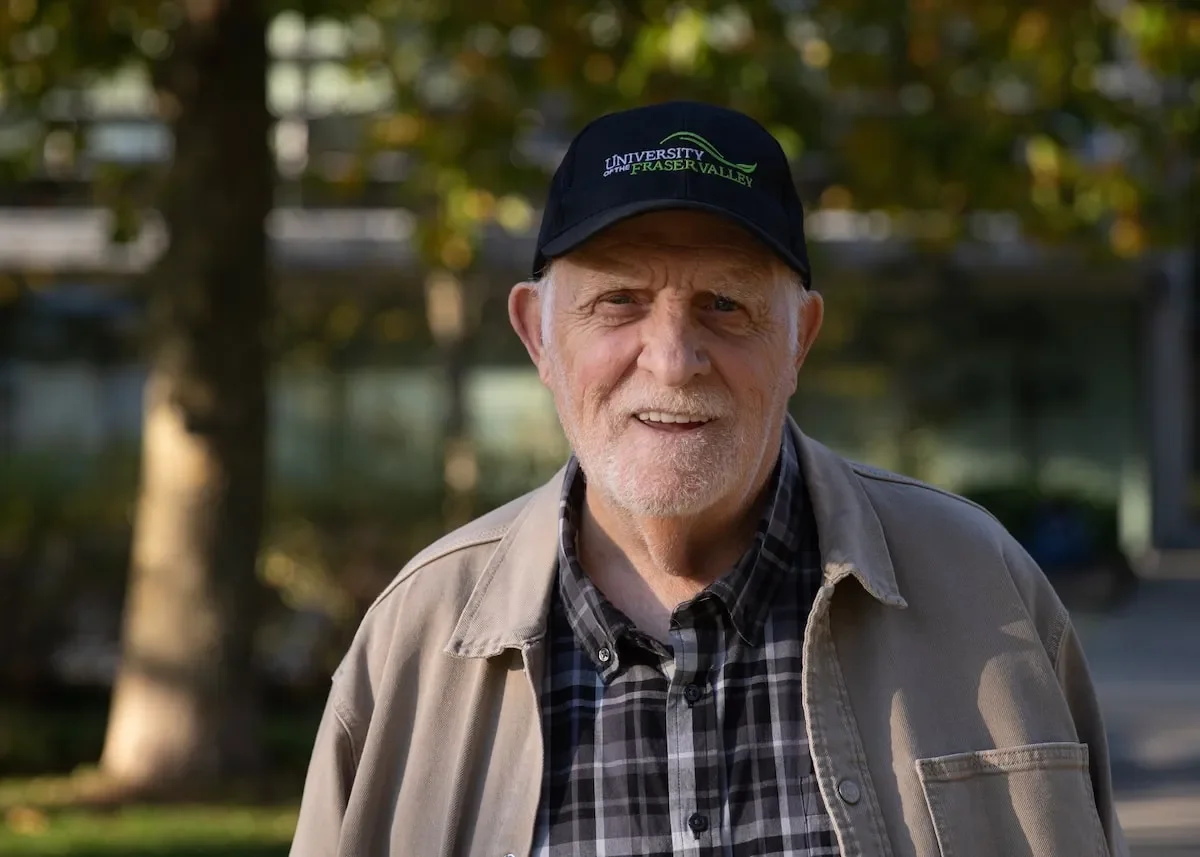
On his first day on campus, Eggert was nervous. He worried about being stared at, or that he would embarrass himself and his professors by being a burden in the classroom.
However, by the end of his first semester, those fears had faded entirely. Fellow students sought out his perspectives, and professors frequently invited him to draw on his expansive life experience. In sociology class, he contributed firsthand accounts of historical events; in business, an instructor asked him to explain how labor unionization had historically functioned in Canada.
“My confidence went up, and now I’m a bit of a character—it’s hard to keep my ego in check,” he jokes.
Today, Eggert co-chairs UFV’s Age-Friendly University steering committee alongside Dr. Shelley Canning, a nursing professor and director of the university’s Centre for Education and Research on Aging (CERA).
“The university is here for everyone, not just young people,” says Dr. Canning. UFV recently held its annual mini-conference celebrating the International Day of Older Persons, welcoming 100 older adults from the local community to campus. “The halls are full of people with gray hair who are laughing and engaged.“
To assess UFV’s baseline age-friendliness, a group of senior undergraduate students compared the university’s existing programs and student demographics against the 10 AFU principles. Simultaneously, a kinesiology student toured UFV’s two main campuses alongside older adults to audit the physical environment—evaluating features like hallway widths, signage, wayfinding, curbs, bathrooms, and parking.
“It is an uphill battle to convince people that aging is important,” says Dr. Canning, who notes that systemic ageism remains pervasive. “Much of this is gentle ageism, where people may assume that older adults are uninterested in being a part of campus life.“
Technology remains another significant concern. While Eggert was never worried about keeping up with academic coursework, he did worry about the digital demands of modern learning, especially in collaborative environments. “It takes longer for us to learn because of the technology gap,” he says.
However, he notes that smaller universities like UFV—which had around 12,000 students in 2024, compared to the 30,000 to 100,000 enrolled at Canada’s largest institutions—often allow professors to be more adaptable to individual student needs.
Intergenerational Benefits in an Aging Society
Younger students also gain significant benefits from intergenerational classrooms. According to Dr. Canning, many kinesiology students initially picture careers working primarily with athletes and young adults. However, after participating in UFV’s free “trishaw” program—which pairs student cyclists with older passengers for rides along a nearby nature trail—several have shifted their focus toward geriatric care and community health.
“They get into these great conversations where the passengers ask the students about their plans, really encouraging them,” she says.
Reed Plowright-Wills, 33, a fourth-year UFV kinesiology student who helps run the trishaw rides, says he had very little experience with older populations before joining the program, having lost his own grandparents at a young age. “It has opened my eyes to working with more than young athletes,” Plowright-Wills says. “I cannot overstate just how valuable that has been.“
Young graduates are entering the Canadian workforce at a time when the national demographic is shifting. According to the Canadian Institute for Health Information, the country’s senior population is expected to grow by 68 percent over the next 20 years.
“Having an opportunity to understand age—it is incumbent on universities to provide that,” Dr. Canning says.
At 84 and three-quarters, Eggert has no intention of slowing down his studies or his advocacy. In addition to his on-campus activities, he sits on several municipal and community boards, including a City of Chilliwack advisory board representing seniors.
“You don’t have to fear old age, you don’t have to lock yourself in an old age home,” Eggert says. “You have to keep fighting, keep stimulated.“