
 admin
Learning becomes relevant when students participate rather than just listening to others. The traditional classroom setting limits thinking by emphasizing delivery over understanding, but new methods are breaking this trend. Improving lesson design and discussion allows students to get a head start and share their thoughts, making education more defined and personalized.
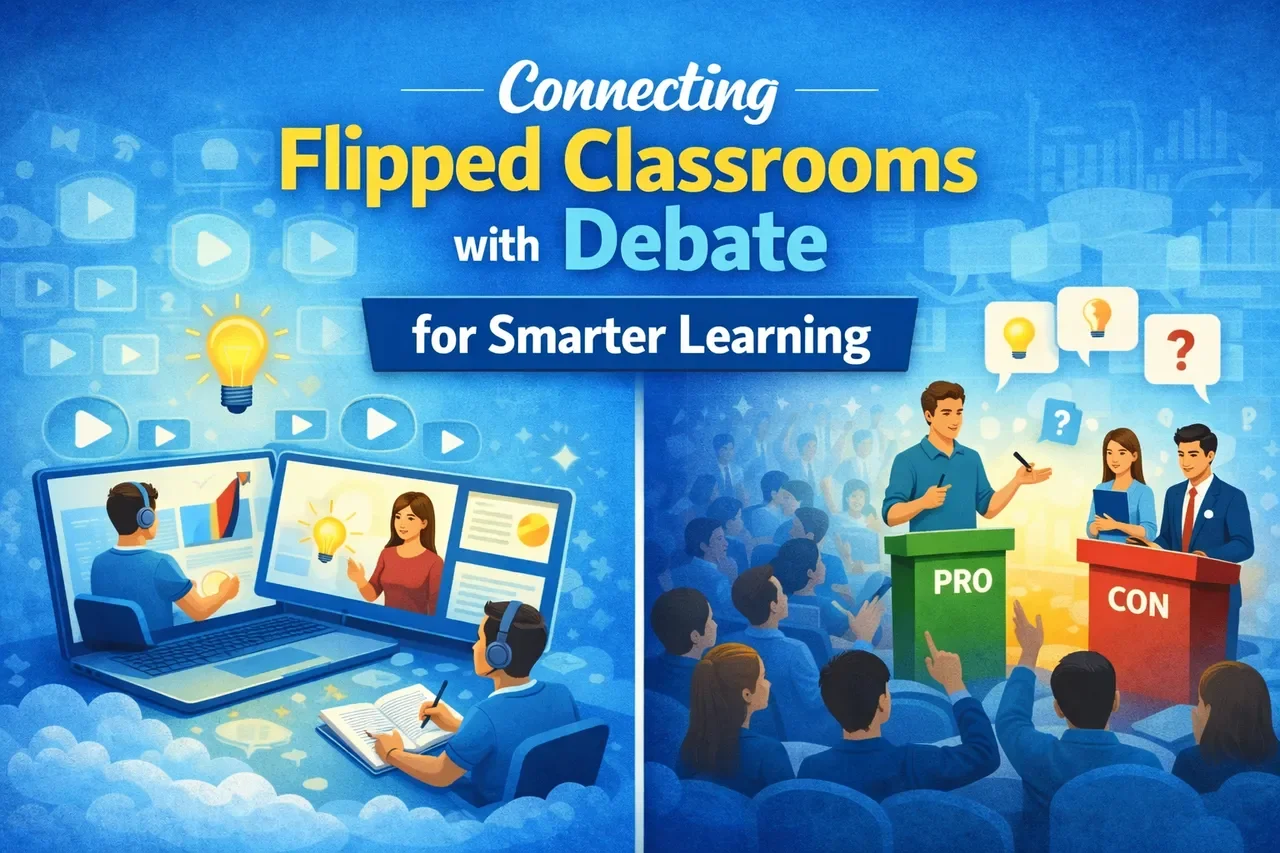
Smarter learning occurs when classrooms encourage thinking, speaking, and reflection. This is where flipped learning and classroom debate meet.
What is Smarter Learning?
Curiosity is the driving force behind smarter learning. When learners inquire about ideas, make connections between concepts, and describe their thoughts in their own words, knowledge acquisition becomes long-term. Smarter learning focuses on understanding and applying information rather than simply memorizing facts.
Classroom debate supports this thinking habit by teaching students to explain ideas clearly and listen carefully. Meanwhile, the flipped classroom model shifts the responsibility of learning to students while keeping teachers as guides. Together, these methods create thoughtful learners.
What is a Flipped Classroom?
In a flipped classroom, students are introduced to concepts before class through videos, reading assignments, or guided materials. Classroom time is then utilized for discussions, practice, and problem-solving activities.
This model gives students control over their pace. They can pause, rewind, or review lessons beforehand, allowing teachers to avoid rushing through lectures and instead engage directly with students during activities. This strategy promotes responsibility, concentration, active participation, and deeper understanding. Active formats can also help with motivation, which matters when 72% of students say they procrastinate.
What is Debate, and How Does it Work?
Debate is a guided discussion where students exchange opinions and justify them with sound reasons. It instills tolerance for opposing views, encourages thinking before speaking, and boosts public speaking confidence.
In a group debate, students form teams to support or oppose a specific issue. They prepare by researching, present their arguments during the discussion, listen to opposing views, and provide feedback. A moderator guides the session to keep it balanced, and students conclude by reflecting on the shared ideas.
How Do Flipped Classrooms Enhance Debating?
Flipped education creates a strong foundation for debates because early preparation makes discussions more meaningful:
- Prepared minds speak better: Studying before class gives students a clear understanding of the topic, leading to confident debate points.
- Time for deeper discussion: Freeing class time from long lectures allows teachers to plan focused debates without rushing.
- Better questions and replies: Prepared learners ask sharper questions and provide thoughtful rather than rushed responses.
- Equal participation: Students who usually stay quiet feel more confident because they are already familiar with the topic.
- Teacher as guide: Educators guide discussions and correct thinking gaps without taking absolute control.
Key Benefits for Learners and Educators
This learning approach supports both students and teachers in practical ways.
Benefits for Learners
- Builds strong speaking skills by helping students share ideas clearly and confidently.
- Improves logical thinking as learners support opinions with reasons.
- Encourages careful listening to understand different viewpoints.
- Develops self-learning habits through pre-class preparation.
- Improves time management as learners plan their studies.
- Increases confidence because students arrive ready to participate.
Benefits for Educators
- Makes teaching more interactive and discussion-driven.
- Reduces the time spent repeating basic concepts in class.
- Allows teachers to focus on guiding thinking and clarifying doubts.
- Helps identify learning gaps quickly through discussion and debate.
- Makes feedback more meaningful by revealing student thought processes.
- Supports reflective growth through structured debate feedback.
Ultimately, classrooms become active, connected spaces where learning shifts from one-sided delivery to shared thinking. Students and teachers collaborate to create a more meaningful experience.
Final Thoughts
Smarter learning relies on how students engage rather than what they passively hear. Flipped classrooms prepare the mind before class, while debates sharpen thinking during class. Combining these methods creates active environments where ideas are shared and understood, turning students into confident thinkers and teachers into guides. When learners prepare, speak, listen, and reflect, knowledge is retained long after class ends.